
WHAT IS: Laboratory labeling
 Thermal Transfer Printing for Laboratory Labeling
Eliminating medical errors is critical when collecting blood, tissue, and other specimens for laboratory analysis. Accurate, legible, and durable labeling is essential to ensure regulatory compliance, patient safety, and reliable traceability. Thermal transfer printing provides a proven solution for laboratory environments where labels must perform under extreme conditions.
Key Benefits
- High-resolution printing of small characters and barcodes
- Exceptional resistance to harsh laboratory environments
- Reliable performance for long-term identification and storage
- Compatibility with ARMOR-IIMAK thermal transfer ribbons
- Accurate and Durable Labeling for Laboratory Applications
Laboratory labels play a vital role in the accurate collection, processing, storage, and tracking of specimens used for diagnostics, clinical trials, and research. Printed barcodes enable precise identification and traceability and must withstand demanding conditions such as staining protocols, chemical solvents, autoclave sterilization, and cryogenic freezing.
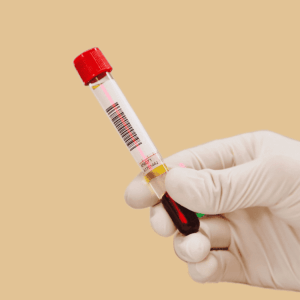
Thermal transfer printing supports single-label printing, offering the flexibility required to mark laboratory products with identification, compliance, and traceability data. This technology is especially well suited for small-format labels commonly used on test tubes, microscope slides, vials, and flasks.
Thermal transfer ribbons deliver precise, high-contrast printing even on the smallest labels. Many laboratory labels are small-scale, sometimes two-part, and may include integrated clear over-lamination to protect printed data throughout processing and storage.
Enhancing Laboratory Safety
Proper labeling is fundamental to laboratory safety. Unlabeled or incorrectly labeled specimens can pose serious health risks, as samples may contain infectious agents, toxic chemicals, radioactive materials, or other hazardous substances. Color-coded labels and ribbons enable quick visual identification of hazard categories, helping laboratories reduce risk and improve operational safety.
Built for Long-Term and Extreme Conditions
Thermal transfer printing is the technology of choice for long-term laboratory applications. Specimens may be stored for extended periods or exposed to chemicals, UV light, moisture, and extreme temperatures. As a result, thermal transfer is widely used for asset tracking, laboratory specimen identification, and cold or freezer storage.
A wide range of thermal transfer inks allows laboratories to select tailored solutions based on required print quality and durability. Thermal transfer technology supports printing on paper, plastic, and polyester label materials, with polyester offering the highest durability and longest lifespan. Optimal performance is achieved by carefully matching label materials with the appropriate ribbon.
Thermal transfer printers also support colored ribbons and label materials, enabling improved visual identification and streamlined workflows through color-coded labeling systems.
Typical Application Environments
- Diagnostic clinical laboratories
- Biomedical research laboratories
- University and academic laboratories
- Pathology laboratories
- Veterinary clinics
- Hospitals and healthcare facilities
Why Choose Thermal Transfer Printing for Laboratory Labeling?
Laboratory labels must withstand repeated handling, chemical exposure, and temperature extremes while maintaining barcode readability and legibility. Thermal transfer printing delivers the durability, accuracy, and reliability required for tracking and tracing samples on tubes, flasks, seals, and laboratory containers.
When accuracy and safety are non-negotiable, thermal transfer printing is the dependable choice for all laboratory labeling needs.
For this application, we recommend the following products: AXR 1; AXR 7+; AXR 8 AXR 9; AXR 800 and AXR 900