
WHAT ARE: Automotive Interior Labels
 Interior Automotive Labels: Durable, Long-Lasting Identification
Labels play a critical role throughout the automotive supply chain, from manufacturing to the end consumer. They are essential for tracking, tracing, safety, and compliance. Interior automotive labels must withstand harsh conditions, including chemicals, extreme temperatures, friction, and long-term wear, while remaining legible over the vehicle’s lifetime.
Key Benefits
- Chemical resistance for exposure to cleaning agents and protective products
- Sharp, dark-colored images and text for legibility over time
- Fade-resistant printing to withstand direct UV exposure
- Resistance to extreme high and low temperatures
Why Interior Labels Are Important
The average car lifespan is approximately 12 years or 200,000 miles, and in some cases, vehicles last even longer. Interior automotive labels must maintain readability, accuracy, and compliance throughout this time. Key considerations include:
- Fade resistance: UV rays can fade images and text if labels are not properly printed.
- Chemical resistance: Labels must endure harsh cleaning chemicals used on vehicle interiors.
- Sharp, dark-colored images: All information must remain legible over many years.
- Temperature resistance: Labels must endure scorching summers and freezing winters.
Types of Interior Car Labels
In the United States, the Vehicle Identification Number (VIN) label is a critical interior automotive label regulated by the NHTSA. Each VIN is a unique 17-character code assigned by the manufacturer. It must remain sharp, clear, and legible throughout the life of the vehicle.
Other common interior automotive labels include:
- Asset labels
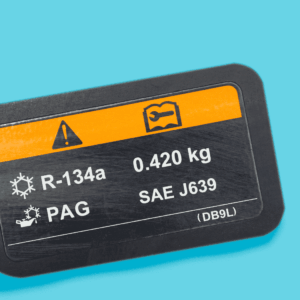
- Warning labels
- Barcode identification labels
- Instruction and information labels
Typical applications for these labels include:
- Airbags
- Seatbelts
- Dashboards
- Seats
- Flooring and carpets
Why Use Thermal Transfer Printing for Interior Automotive Labels?
Thermal transfer printing provides the durability, precision, and chemical resistance required for interior automotive labels. Using ribbons such as wax/resin or resin, thermal transfer printing can be applied to durable label stocks like polypropylene, vinyl, polyethylene, and more.
- Advantages of thermal transfer for automotive labels:
- Long-lasting, sharp print for text, barcodes, and symbols
- High resistance to chemicals, heat, and UV exposure
- Durable labels suitable for various interior surfaces
With thermal transfer technology, automotive manufacturers can ensure their interior labels meet regulatory requirements and maintain legibility throughout the vehicle’s lifespan.
For this application we recommend using APR 6; AXR 1 and AXR 7+