
WHAT ARE: Building Material labels
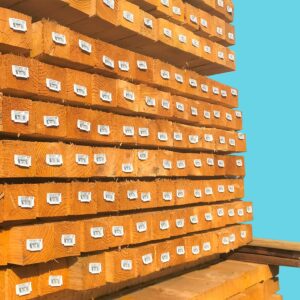 Accurate building material labels are essential for ensuring product quality, regulatory compliance, and traceability. From doors and windows to insulation and other construction products, labels must convey technical information clearly while withstanding harsh manufacturing and job site conditions.
Benefits of Building Material Labels
- Solvent- and abrasion-resistant printing
- Enable traceability of parts and products throughout their lifecycle
- High-quality, perfectly readable barcodes for inventory and compliance
- Compatibility with ARMOR-IIMAK durable label solutions
Labeling Requirements for Building Materials
In the European Union, the Construction Products Regulation (CPR) governs the labeling of construction products such as doors, windows, and insulation materials. Compliance with CE marking regulations is mandatory for all manufacturers and importers.
Labels must provide information necessary for traceability and supply chain management, including:
- Lot or serial number
- Company name and address
- Technical specifications and safety information
Additionally, since 2012, France requires a label indicating the emissions of volatile pollutants on all building materials sold in the country.
Why Thermal Transfer Printing for Building Materials Labels?
Building materials labeling often occurs in harsh environments—hot, dusty, and dirty—typical in lumber, concrete, and drywall production and handling. Thermal transfer printing is ideal for this sector because it delivers:
- Sharp, high-quality print suitable for barcodes, serial numbers, and regulatory information
- Durable, permanent labeling resistant to abrasion, dust, and chemicals
- Reliable performance in extreme manufacturing and outdoor conditions
Thermal transfer technology ensures that labels remain legible and compliant throughout the product’s lifecycle, meeting both operational and regulatory requirements.
For this application we recommend using APR6; APX FH+ or APR400 .