WHAT ARE: Tyre Labels
 Automotive and tire labels play a critical role in ensuring safety, compliance, and traceability across the entire vehicle manufacturing process—from the assembly of individual components to the moment the vehicle reaches the consumer. Because automotive parts are exposed to harsh environments, these labels must withstand extreme durability and abrasion demands. High-performance labeling not only enhances production efficiency but also ensures that essential information remains readable for the lifetime of the vehicle.
Key Benefits
- Exceptional resistance to high-temperature vulcanization processes
- High-precision printing for small characters, symbols, and barcodes
- Tire Labels for Automotive Vehicles
Tire labeling is one of the most visible and regulated areas of automotive identification. Tire labels help verify product accuracy and provide essential information related to:
- Tire maintenance
- Safety performance
- Specifications and compatibility
Many tire labels are pre-printed, then customized with variable data such as dimensions, performance icons, barcodes, and regulatory identifiers. This allows consumers to make informed purchasing decisions and ensures compliance with country-level labeling rules.
Requirements for Tire Labeling
Labeling standards for tires vary globally. For example, in the United States, the Uniform Tire Quality Grading Standards (UTQGS) requires tires to display:
- Treadwear grade
- Traction performance
- Temperature resistance
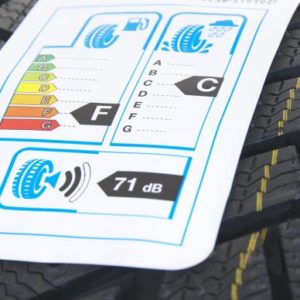
Most importantly, tire labels support full traceability. If an issue occurs at any point—before, during, or after production—the tire can be traced back to a precise date, time, and batch to ensure rapid corrective action.
Additional data commonly found on tire labels worldwide includes:
- Aspect ratio
- Tire size
- Seasonal performance (mud, snow, ice, all-weather)
- Manufacturing information
- Construction materials
- Lot numbers (important for recalls)
- EU Tire Label Regulations (2021 Update)
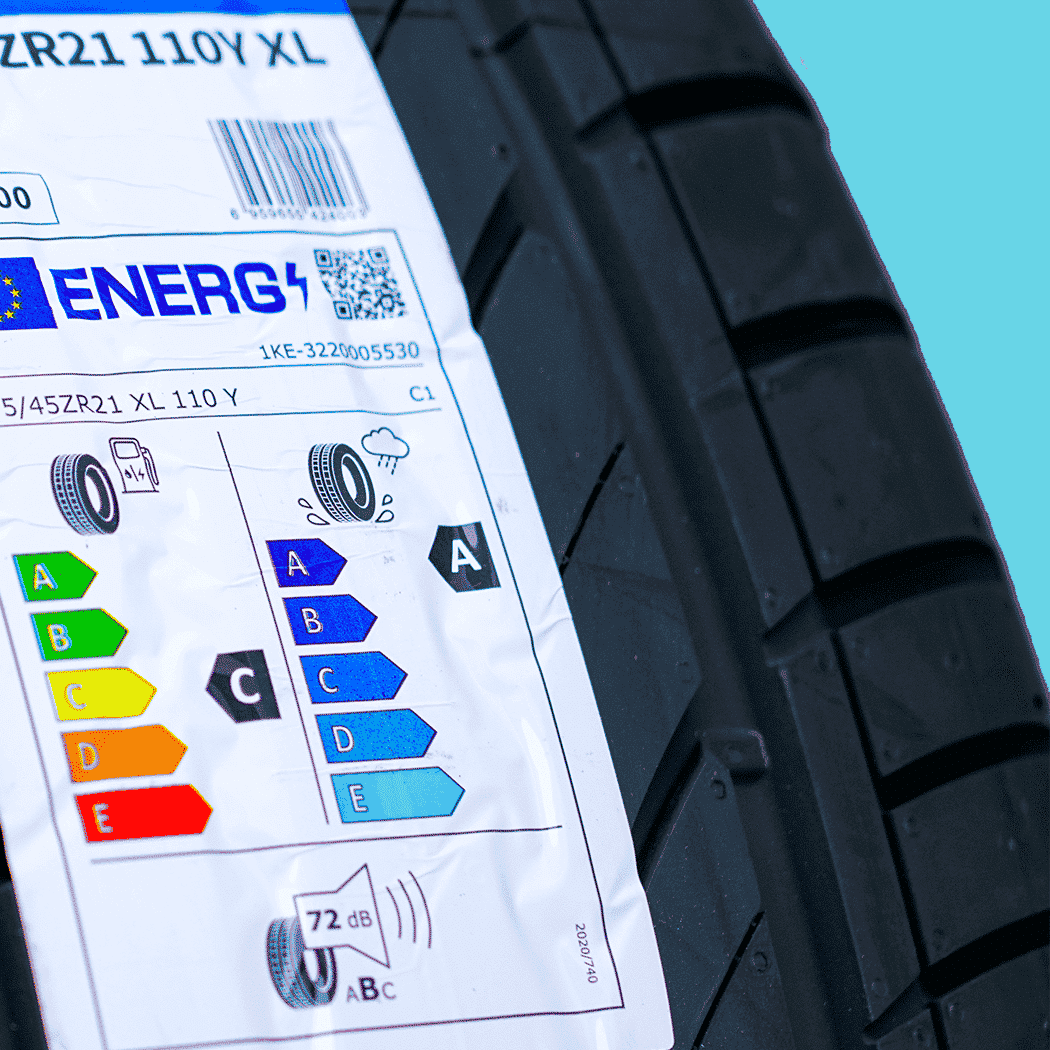
In 2021, the European Union implemented enhanced tire labeling requirements designed to improve clarity, accuracy, and environmental transparency. The new labels resemble the well-known EU energy efficiency format and must include:
- QR code linking to the EU Commission database
- Tire manufacturer
- Unique tire type
- Rolling resistance class
- Wet grip class
- External noise class
- Seasonal performance icons
These changes support safer mobility, increased consumer understanding, and improved environmental decision-making.
Why Use Thermal Transfer Technology for This Application?
Thermal Transfer Printing for Tire Labels
Tire labels must withstand particularly harsh conditions, including:
- Heat from vulcanization
- Moisture
- Dust and abrasion
- Handling during shipping and installation
For this reason, Thermal Transfer printing is the most reliable technology for producing durable, high-definition identification on tire labels. ARMOR-IIMAK ribbons offer:
- Exceptional print durability
- Reliable adherence on tire-label substrates
- High-resolution printing for barcodes, icons, and small alphanumeric data
You need a thermal transfer ribbon that is tough, consistent, and engineered for demanding automotive conditions.
You need ARMOR-IIMAK.
For this application, we recommend the following products: AXR 1; AXR 7+; AXR 8; AXR 9; AXR 800; AXR 900